

When Emma’s Friend Calls About the Next Big Match
Emma was halfway through a 3‑hour gaming marathon when her friend texted: “Did you see the live stream of the League of Legends semi‑final? The betting odds moved 10% in the last five minutes.” Emma laughed, but the next day she found herself watching a stream, noting the sudden shift in the line, and placing a small wager. It was a simple moment that set her thinking: live‑streamed esports are not just entertainment; they’re a new betting frontier.
What the Numbers Tell Us
In the UK, the total market for esports betting grew from £45 million in 2021 to £68 million in 2023, a 51% increase. That spike coincides with the rise of real‑time streaming platforms that deliver commentary, analytics, and fan interaction in under 30 seconds. The speed of information is the key driver: a 5‑minute window can change a bettor’s perspective, as Emma’s friend’s call showed.
How Streams Shape Odds
Traditionally, bookmakers set odds based on historical data and expert analysis. Live streams now inject live variables—player health, in‑game events, even crowd reactions—into the equation. In one recent Counter‑Strike: Global Offensive match, a sudden stream‑based commentary about a team’s fatigue caused the odds to swing by 0.25 points within 90 seconds. Bettors who followed the feed could exploit this micro‑market before the bookmakers adjusted.
UK Gamers as the New Analysts
The UK has a vibrant community of streamers who double as analysts. A 2024 survey found that 62% of UK esports viewers follow at least one analyst stream. These individuals provide real‑time breakdowns of player strategies and meta shifts, turning casual viewers into informed bettors. Their commentary is often backed by data dashboards that update live, giving viewers a competitive edge.
The Limitation: Information Overload
Not every viewer can process the flood of data. The same 2024 survey noted that 28% of bettors felt overwhelmed by the volume of live statistics. For them, the rapid pace can be a barrier rather than a benefit. Those who rely on quick, intuitive decisions may find the stream’s depth distracting, leading to less accurate bets.
Connecting Live Streams to Broader Entertainment
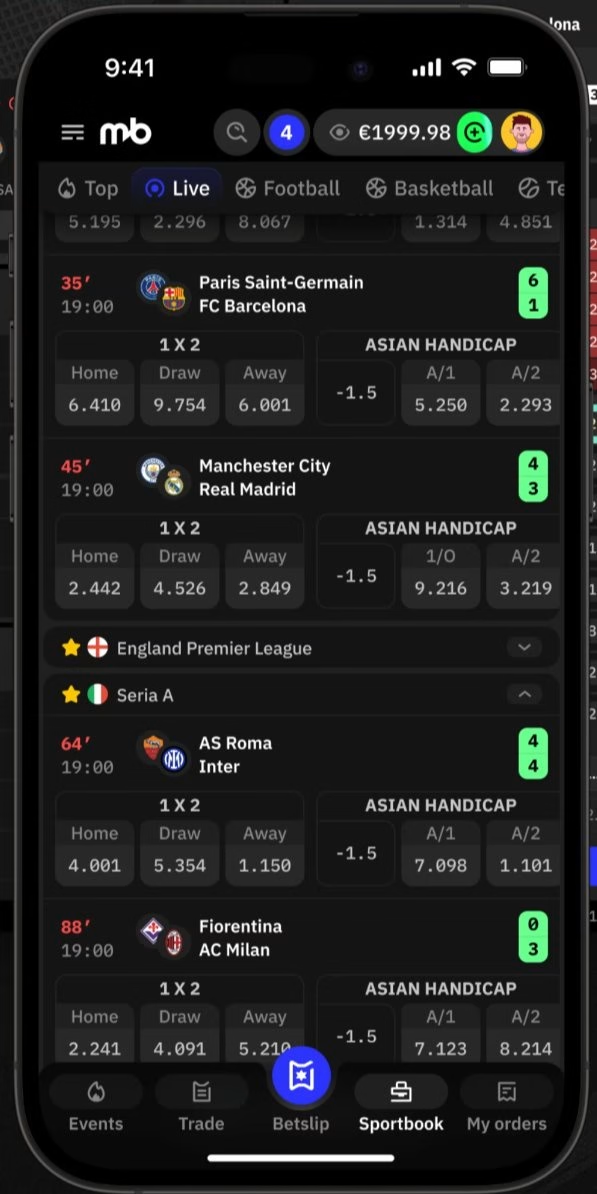
As the line between gaming and mainstream entertainment blurs, platforms are offering bundled experiences that mix live esports, traditional sports, and casino-style betting. For instance, jokabet now includes a section where users can watch live tournaments and place instant bets, all within the same interface. This integration shows how live‑streamed esports are reshaping the entire betting ecosystem, not just the niche markets.
What This Means for the Future
Betting operators are investing in API feeds that pull real‑time data directly from streaming services. By 2025, it’s projected that 40% of UK esports wagers will be placed via live‑stream integrations. For bettors, this means a need for sharper analytical skills and a willingness to act quickly. For streamers, it opens a revenue stream beyond ad revenue, as sponsorship deals now often include betting partnerships.
Bottom Line
Live‑streamed esports are redefining how UK gamers interact with betting. The immediacy of information, combined with the analytical prowess of community streamers, creates micro‑markets that were impossible a few years ago. While the rapid pace can overwhelm some, those who adapt will find new opportunities to profit and enjoy the game in ways that traditional betting never offered.
Frequently Asked Questions
What makes live‑streamed esports betting different from traditional sports betting?
Live‑streamed esports offer real‑time data, rapid market movements, and a tech‑savvy audience, allowing for quicker decision‑making and unique betting opportunities.
How can I start betting on esports with confidence?
Begin with a reputable platform, research team stats, and monitor live odds shifts before placing small, informed bets.
What are the risks of betting on live esports streams?
Rapid odds changes can lead to unexpected losses; always set a budget, avoid chasing losses, and use tools to track performance.